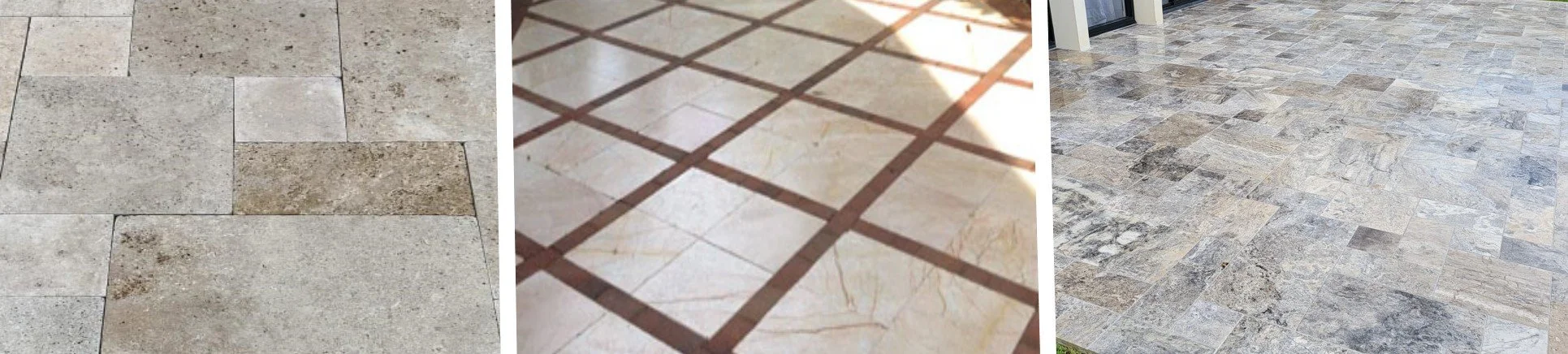
The Quiet Romance of Travertine in the Garden
As a landscape designer, I’ve always loved working with natural stone. It’s certainly more labor-intensive, but there is a profound feeling in working with something that has been around forever and will remain long after we are gone. Stone arrives carrying a past. It has known eons and has seen the passage of history long before it ever becomes part of a garden. It is a sense of permanence in a world of constant revision. A stone path implies that someone walked here before and that someone may walk here long after. In this way, stone grounds a garden emotionally as much as it does physically.
A Stone Shaped by Water
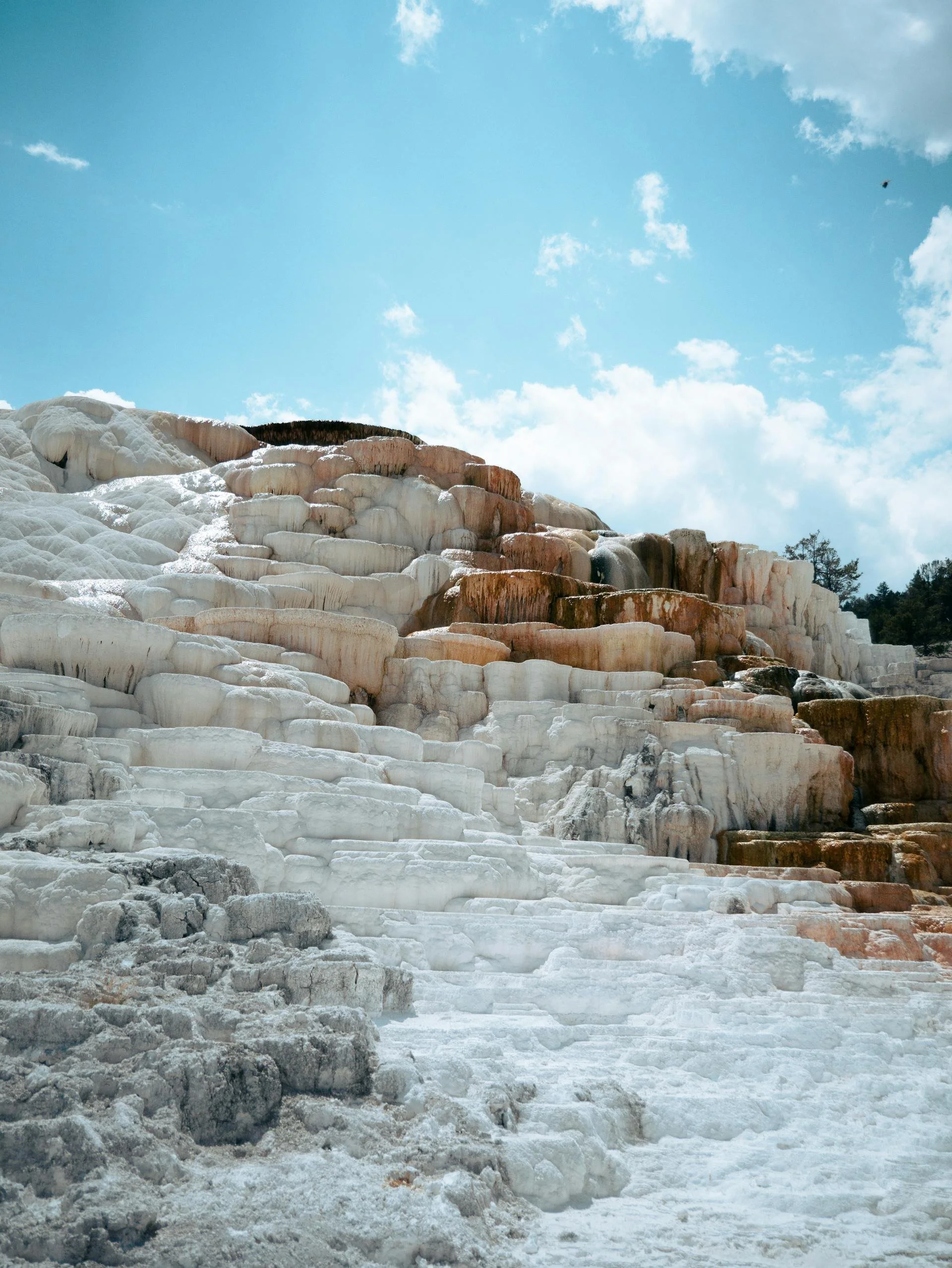
Travertine is unique because it is a relatively young stone. As you are reading this, travertine is forming along the hot springs of Yellowstone and in other geothermal areas. Unlike Bluestone or other natural materials, it isn’t created by sheer force or compression, but by movement and warmth.
Travertine is shaped by mineral-rich hot water, and forms slowly, layer by layer, as calcium settles out of flowing springs. Tiny pockets form as gases escape, giving the stone its characteristic texture.
A Palette Shaped by Nature
Travertine’s color range is subtle and deeply romantic. It ranges from ivory to coffee, and there are pale silvery greys. These tones are the result of mineral content and regional geology Because no two pieces are the same, a travertine surface reads as living rather than static. Each slab holds gentle veining and shifts in tone that echo ancient architecture and weathered ruins.
History Underfoot
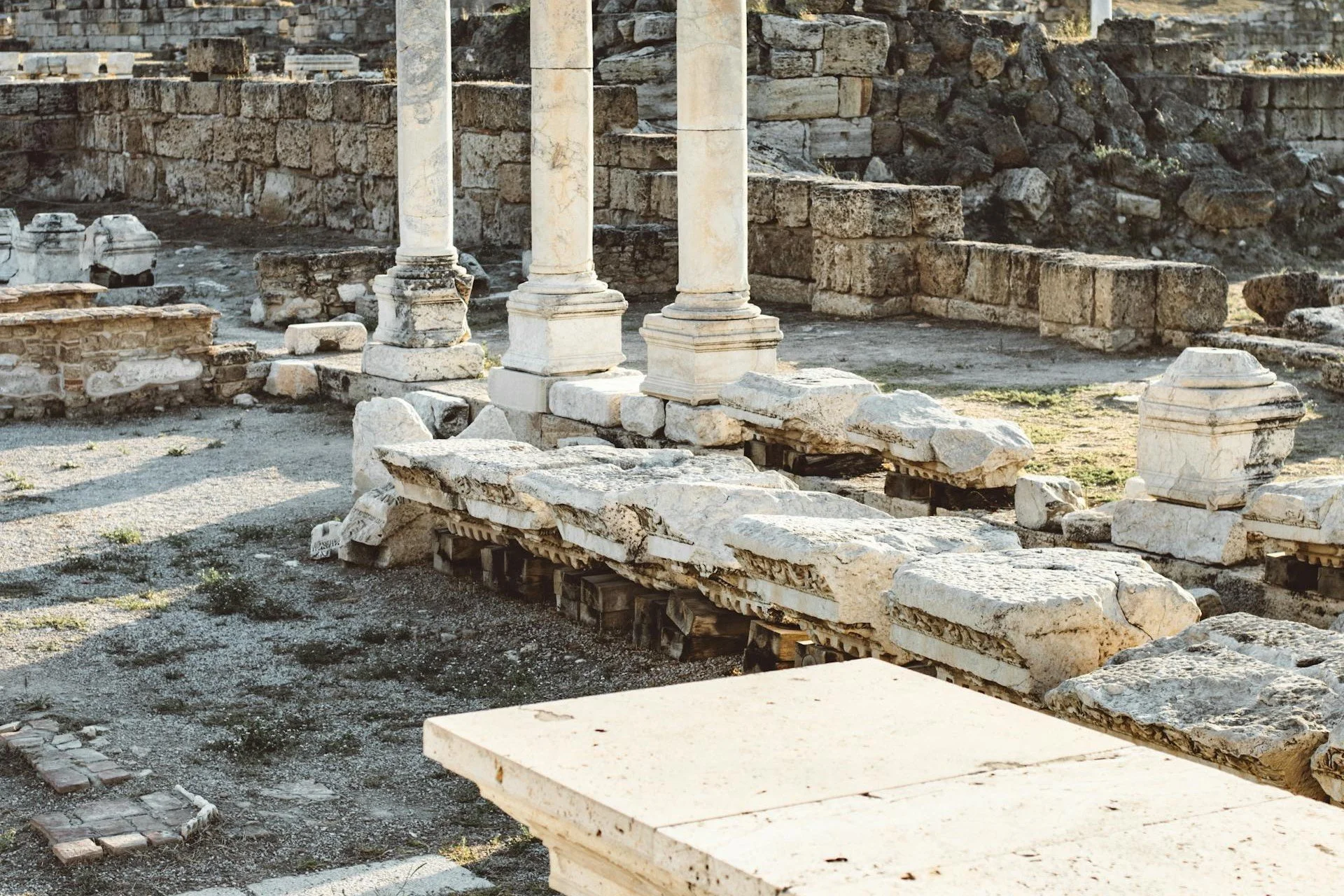
To use travertine today is to participate in a long lineage of builders. It has been used for thousands of years, most famously in ancient Rome. The Roman Colosseum was constructed largely of travertine and it still stands as a testament to the stone’s durability.
Designing for Texture and Touch
Travertine brings a sense of quiet permanence to a landscape. It encourages slower movement and longer pauses, making a new garden feel as though it has always been there. It is particularly lovely for:
Courtyards & Terraces: Its warmth underfoot makes it comfortable for bare feet.
Garden Paths: The naturally soft, weathered feel provides a gentle walking surface.
Water-Adjacent Spaces: Its history with water makes it a natural companion for fountains or ponds.