
Color Repetition in the Landscape: Creating Connection Through Echoes of Color
Have you ever stepped into a garden and instantly felt a sense of calm, even if you couldn’t quite explain why? Some landscapes naturally feel connected. Everything seems to belong together in a way that feels effortless and inviting. One of the most effective ways to create a landscape that feels cohesive and intentional is through a technique called color echoing.

In the gallery on my phone, there is an entire folder of photo notes dedicated to flowers blooming in the same shade across completely different plants and growing conditions. It has become one of my most essential design tools—a visual reference for color repetition and seasonal layering, and an invaluable reminder of what blooms in a particular hue long after the flowers themselves have faded. Over time, the collection has also become an exploration of harmony, rhythm, and the subtle relationships that create cohesion within a garden.
What Is a Color Echo?
Color echoing is the practice of repeating a similar flower or foliage color throughout different areas of the garden to create visual unity.
It’s especially useful because most properties contain a wide range of growing conditions. You may have hot, dry sun in one area and cool, deep shade in another. The same plants won’t thrive everywhere, but color can still tie those spaces together beautifully.
When color is repeated thoughtfully throughout a landscape, the eye naturally moves from one space to the next. The garden begins to feel connected, as though every area belongs to the same story.
The key is that color echoing is not about repeating the exact same plants or combinations over and over. It’s something much softer than that. It’s about creating a quiet sense of familiarity throughout the landscape. Not duplication, just an echo.
The Quiet Power of Chartreuse
In a recent project, I worked with a long property that needed a stronger sense of connection. Each area had different light conditions, different purposes, and completely different plant palettes, but the landscape still needed to feel unified.
To create that cohesion, I used chartreuse tones throughout the design. Chartreuse is especially powerful in the landscape because it behaves almost like light itself as it brightens darker spaces, draws the eye naturally, and creates visual emphasis without feeling heavy. Brighter tones are especially useful for visually pulling areas forward, and throughout this project the repeated flashes of chartreuse also helped the narrow property feel broader and more open in key areas.
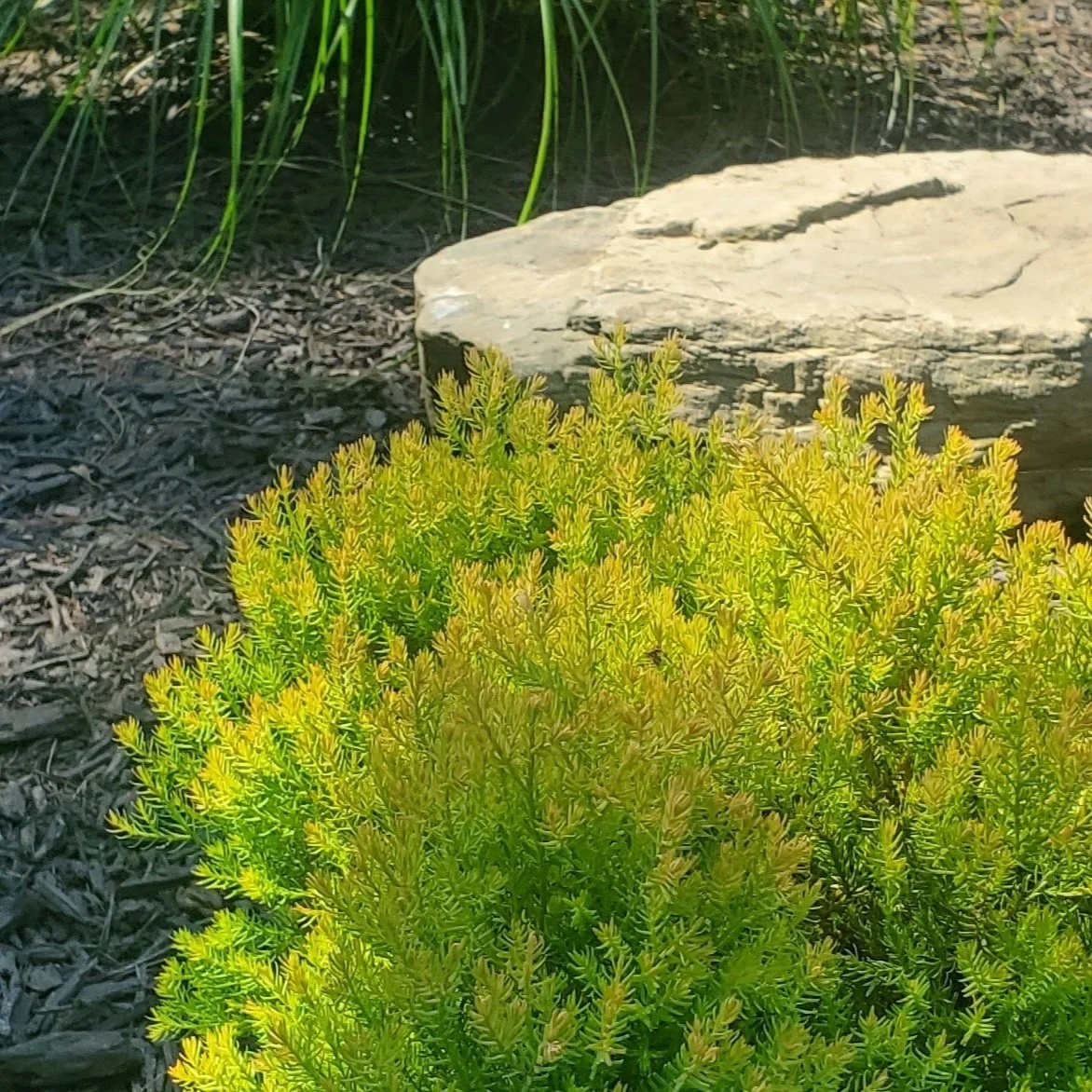
At the sunny end of the property: Thuja occidentalis ‘Fire Chief’ paired with a large boulder. In the afternoon sun, it immediately caught your eye.
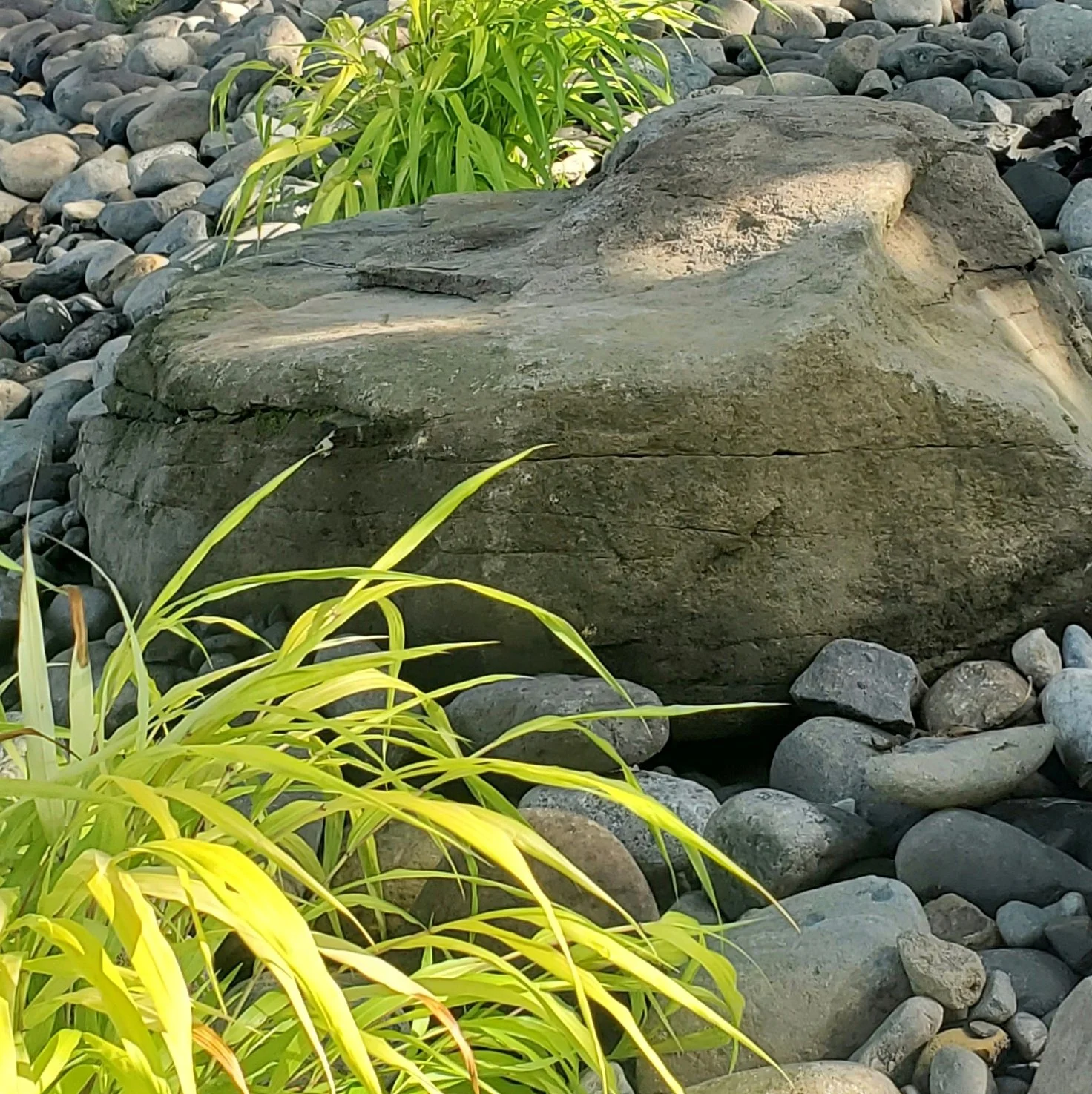
At the opposite end of the property, that same glowing tone appeared again in a completely different form: soft drifts of Hakonechloa macra (Japanese forest grass) spilling beside another boulder in the shade.
Different plants. Different conditions. But the same soft, luminous feeling.
When a color reappears throughout a landscape, even subtly, it creates a thread that quietly ties everything together. The eye recognizes the repetition, and the design feels intentional, even when the planting style itself is loose and natural.
Restraint Creates the Romance
The plants themselves do not need to match. The feeling does.
When color appears in just the right places, a landscape becomes more than a collection of planting combinations. It becomes an experience, something that gently guides you through the garden and invites you to slow down and notice the details.
Even the most naturalistic gardens are rarely accidental. Beneath the looseness is a quiet framework of repeated ideas: rhythm, balance, texture, movement, and subtle echoes of color.
In the end, creating a cohesive garden often comes down to restraint. That is where the romance lives. Not in chaos, but in thoughtful intention that still allows the garden to feel beautifully wild and alive.
You don’t need large amounts of repeated color to make this technique work. In fact, too much repetition can make a garden feel flat or overly controlled. The beauty comes from restraint and thoughtful placement.
Try using color echoes near focal points, transitions, pathways, or the edges of garden rooms to create a gentle rhythm throughout the space.